


By Abu Kamruzzaman, PhD
What is ChatGPT?
ChatGPT is an Artificial Intelligence (AI) tool that responds to user prompts and answers users’ questions using a dataset of 300 billion words and 175 billion parameters. The parameters are the statistical weights that the ChatGPT tool/model learned during its training. According to IBM, ChatGPT is a Generative AI deep-learning model that can generate high-quality text, images, and other content based on the data used in its training (GPT stands for Generative Pre-Trained Transformer). It is a Large Language Model (LLM) using deep learning, capable of understanding and interpreting user requests with appropriate responses in natural human language to complete a wide range of text-based tasks such as answering questions and generating responses. The new paid version of ChatGPT 4.0 has 1.76 trillion parameters, which improves the natural language of the responses, and can process up to 25,000 words at once.
Out of curiosity, I asked the OpenAI ChatGPT (version 3.5, the free version of ChatGPT) “What is ChatGPT?” and it provided me with a detailed response of about 1000 words. I asked the question three times in the same user session, and each time it generated a somewhat different response. Comparatively, I asked Google search the same question, “What is ChatGPT?” and I got the same links in the search result every time.
Now the concern arises: Is an AI tool like ChatGPT a threat to academia? Plagiarism has always been a concern, even before ChatGPT, but because ChatGPT’s responses are dynamic, many students in the same class could submit an answer to the assignment (such as “What is ChatGPT?”) using ChatGPT, and a professor might not be able to recognize that the answers were all generated through AI. The professor would have to be familiar with the students’ individual writing styles in order to determine the origin of the response to the assignment.
What can ChatGPT do?
ChatGPT 3.5 can perform almost any written task, such as writing essays, Excel formulas, poems, movie scripts, research topics, content summaries, it could also build a resume and cover letter, debug code (Python, JavaScript, C++, C#, Java, Ruby, PHP, Go, Swift, TypeScript, SQL, Shell), or even plan a holiday trip.
ChatGPT 4.0 can learn a language with 26 different language options, generate a response to a prompt of images (for example, submit a picture of ingredients and ask ChatGPT to create a recipe from the image), and describe images for the blind.
ChatGPT Adoption or Embargo?
ChatGPT is indeed a big threat to our existing academic establishment. As responsible educators, we must ask, “Should we ban such a tool from academia completely?” Some countries already ban ChatGPT, and the New York City school system initially banned it but later rescinded the ban. Since then, the chancellor of New York City public schools, David Banks, has outlined plans to engage with ChatGPT and similar tools. The initial ban in NYC was due to potential misuse and concerns raised by educators. But AI resources like ChatGPT can improve administrative tasks, communication, and teaching in schools, and the NYC Department of Education intends to provide educators with a toolkit of AI resources for educators to use as they initiate discussions and lessons about AI in their classrooms.
The CUNY community has also been debating its policy on AI technology. The focus of our CUNY IT Conference 2023 was Generative AI and its usage. At least twelve presentations directly related to ChatGPT (abstracts for all presentations, including keynote presentation slides and some presenters’ slides, are available on the registration web page: events.govtech.com). The conference took place from November 30 (the 1st birth day of ChatGPT) through December 1 at John Jay College of Criminal Justice, and registration was free and open to higher education employees only. Since the conference theme was related to Generative AI tools like ChatGPT, almost all the presentations, including both keynote speakers, discussed the pros and cons of this emerging technology.
In the last few months, CUNY Central and many CUNY campuses have also hosted their own seminars regarding ChatGPT, in order to bring awareness to its educators on this important, emerging topic. Most of the presenters in those seminars advocated for the use of AI tools in the classroom. Most recently, on November 17, 2023, the CUNY Innovative Teaching Academy under the CUNY Office of Academic Affairs (OAA) hosted a faculty seminar on “Bias, Accuracy and Ethical Issues of AI.” The presenters advised faculty to include guidelines for using AI tools in their course syllabi. They also discussed how to investigate students suspected of cheating using AI tools. Previous sessions from the same organizer in September and October this year also focused on AI, with the presenters discussing the ways in which AI can improve education. The CUNY Teaching and Learning Conference 2024, hosted at CUNY Graduate Center on March 22, already includes a proposal on “Pedagogical approaches to AI,” and it’s likely that other presentations at the conference will also discuss AI in the classroom. It’s also noted that the senior leadership of CUNY OAA are big advocates of bringing AI technologies into the classroom.
Future developments of ChatGPT:
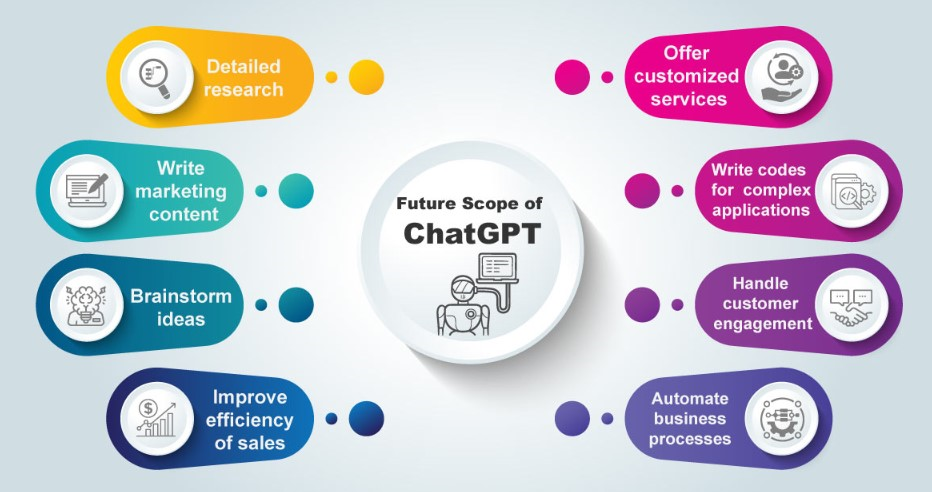
- GPT-5 is expected to be released to the public in 2024 will contain much more improved memory and contextual understanding than the current GPT-4
- SemiAnalysis reports that companies like Google, OpenAI/Microsoft, and Meta will train similar models worth over $100 billion dollars
Final thought on ChatGPT:
Faculty have the freedom to choose the study content for their students, but It’s important that students should be allowed to learn from the best resources available. The industry will be always moving towards generating big revenues, and it’s impossible to stop the advancement of AI at a time like this. Therefore, it’s important that students should be provided with the choices of the best possible tools to learn the assigned content, so long as faculty establish parameters of honesty and integrity.
Author Bio:

Abu Kamruzzaman, PhD is the full-time Cybersecurity &Informatics / Information Systems Assistant Professor with the department of Business & Economics in the School of Business and Information Systems at York College/CUNY. His research interests include Cybersecurity, Data Science, Machine Learning, Quantum Computing, and Cloud Computing. He has taught undergraduate and graduate level computing courses in CUNY since 2001. He has at least 22 years of professional industry experience building, leading, and supervising projects for mobile applications, Enterprise applications, web applications, databases, and Data Analytics both in Microsoft and Linux platforms with 500K+ active users and 20M+ historic users. He has many publications and has presented and chaired national and international conferences and has received awards for his work. Dr. Kamruzzaman is a frequent reviewer of journals and IEEE publications and has coauthored books on Cybersecurity.
Weblink York: https://www.york.cuny.edu/portal_college/akamruzzaman
Teaching HOME: https://sites.google.com/view/drabuk

