By Svetlana Swietavosko
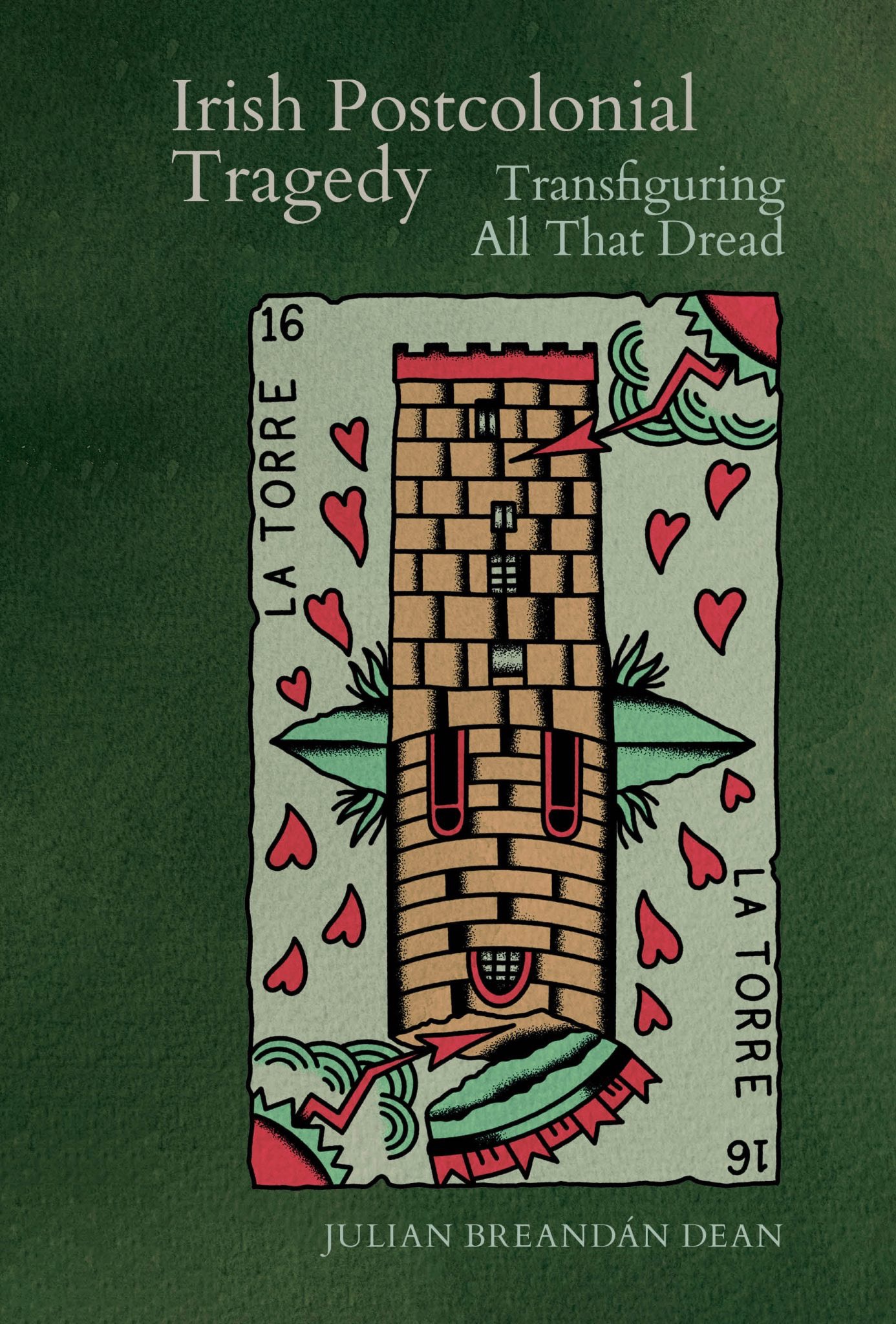
In his new book, Irish Postcolonial Tragedy: Transfiguring All That Dread, published July 2026, Julian Breandán Dean, an assistant professor of English at York College explores the relationship between literature and history through the lens of multiple literary works and critical perspectives.
The study connects Irish postcolonial literature with classical tragedy. Dean examines literary works by playwrights and poets including William Butler Yeats, Samuel Beckett and John Millington Synge, at the same time introducing readers to lesser-known works such as Mairéad Ní Ghráda’s An Triail and Marina Carr’s iGirl.
In the book, Dean argues that Ireland’s literary development is characterized by a unique combination of classical antiquity, realism, naturalism and postmodernism, caused by the absence of a continuous indigenous theatrical tradition and limited theatrical influence of the Elizabethan and Shakespearean era.
A central idea of the book is that tragedy is rooted in ideals that are impossible to achieve. Both the writer and the audience of the tragedy are aware of the catastrophe awaiting the tragic hero, which resonates with the anticolonial movements discussed by Dean, in which ideas of liberation are constantly confronted with obstacles and unrealized ambitions.
The book also raises difficult questions about what survives after political and cultural destruction. Dean begins with bringing up a quote from Yeats’s “Lapis Lazuli” – a poem praising the immortality of art against the rise and fall of civilizations. The book also leaves room for the moral complexities within Indigenous societies themselves, a question explored in other postcolonial works such as Chinua Achebe’s Things Fall Apart.
A crucial theme in the second part of the book is sacrifice. The tradition of Irish postcolonial tragedy sees sacrifice as an individual means of liberation and a mechanism through which communities restore their values after a moral crisis related to colonialism. Dean observes this dynamic in Synge’s The Playboy of the Western World, where Christy Mahon’s supposed killing of his father initially makes him a heroic figure in the eyes of the community – an example of how the sacrifice serves the individual. When the truth is revealed, however, the community turns against him in an attempt to restore the usual social order.
Dean’s Irish Postcolonial Tragedy challenges conventional ideas about postcolonial societies and their literature, raising questions about the relationship between nationalism and liberation, the role of individual experience in the postcolonial tragedy, and the continuing influence of colonial legacy on postcolonial identity.
Irish Postcolonial Tragedy offers an opportunity to explore how literature reflects the historical and cultural consequences of colonialism in Ireland. It provides an analysis of both well-known and newer works, as well as a possibility to look at them from a different perspective. Although the study engages with complex historical and sociopolitical questions, it does not require prior expertise in the field. “The book will be available at the college library this semester to encourage students to engage with a topic that still remains highly relevant globally,” Dean said.