

By Jasmin Shirley
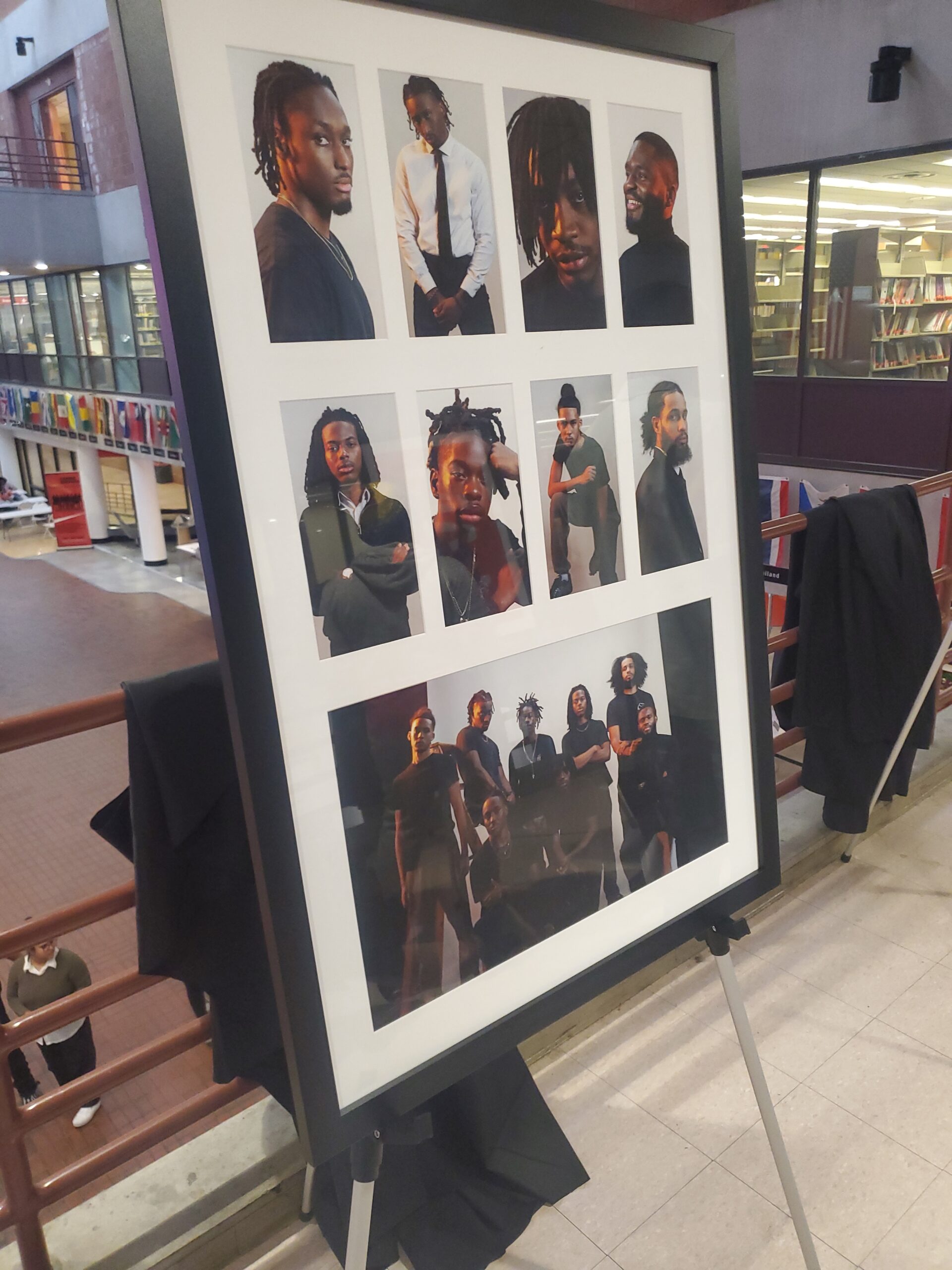
On a Wednesday afternoon near the Men’s Center at York College, cloth-covered tables were set up, and two TV screens displayed a slideshow of photography and art. Nine meticulously crafted canvas prints by Julian Ali, featuring York College alumni and students, dominated the space. Their vibrant colors and carefully composed designs captivated attendees. The hallway was also filled with the sweet, resonant melodies of Samuel Guillaume, a York College alumnus, playing the piano Roosevelt Smith, the director of the Men’s Center and the driving force behind the York Male Initiative, warmly welcomed the growing crowd and introduced the evening’s speakers.
Dean George White initiated the program with a powerful historical reflection. He spoke about the origins of the phrase “taking up space,” tracing its roots to the oppressive era of slavery. He exemplified that the concept represents the collective struggle for Black freedom, and that being brave and being yourself is key to resisting injustice. He then recited a poem by Yusef Kumunyakha, a piece that celebrated the beauty and complexity of the human body, both its flaws and its holy and everyday aspects.
Professor Deshawn Nelson followed Dean White, giving a compelling talk on civic engagement. He defined civic engagement as collaborative problem-solving within communities and highlighted the pressing need for greater connectivity, particularly within Black communities. Nelson pointed out that many individuals, despite being physically present in their neighborhoods, lack meaningful connections.
He introduced Uri Bronfenbrenner’s ecological systems theory, explaining how individuals exist within a multitude of interconnected systems, from family and neighborhood to political and legal structures. Nelson urged the audience to adopt a spirit of engagement, emphasizing that the solution to community challenges lies in forging connections with diverse individuals.
Samuel Guillaume returned to the piano, offering a soulful rendition of the African American anthem, “Lift Every Voice and Sing.
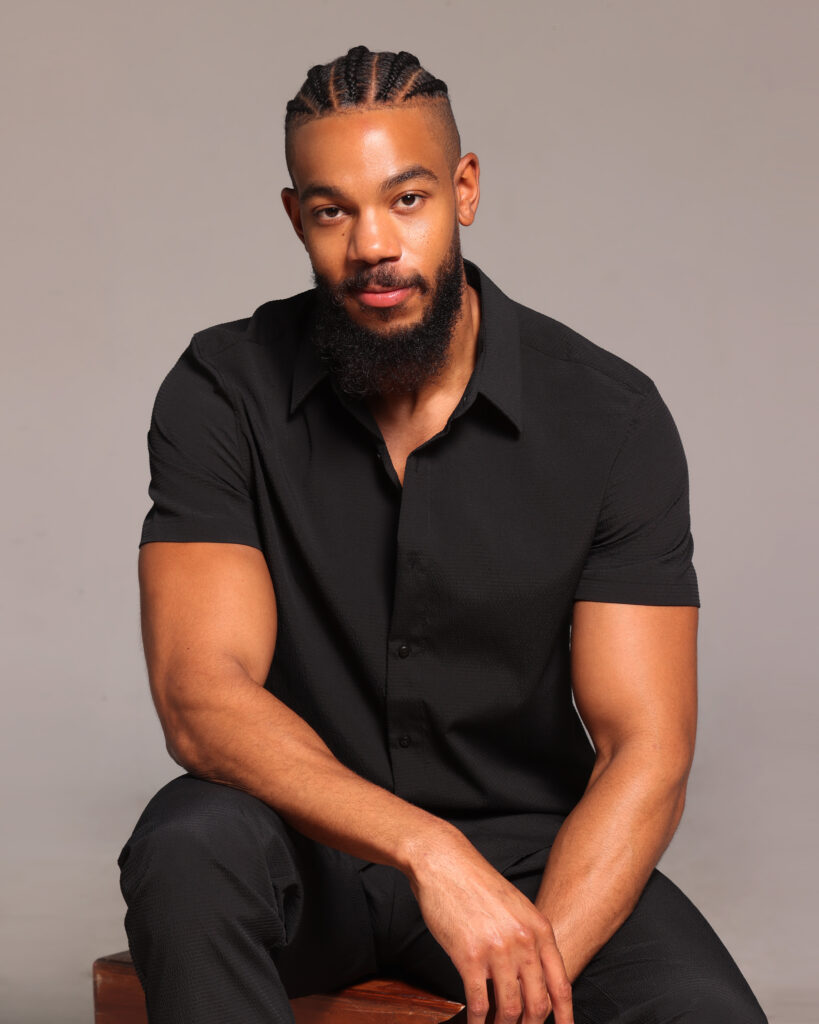
Edferson Jonathan Gernier, another York College alumnus, shared his personal journey and the significance of completing a college degree. He cited the statistic that Black individuals are 38% less likely to graduate college, with Black men facing a 45% lower likelihood. He expressed his desire to challenge societal narratives and inspire young men to pursue their educational aspirations. Gernier acknowledged the challenges he faced but emphasized the importance of perseverance and purpose. He concluded by stating that “taking up space” is not merely about physical presence but about leaving a lasting impact.
Professor Pittershawn Palmer recited her poem, “In This Space,” exploring the transformative power of claiming space for self-expression.
York College students Kenzai Sinclair and Hector Santos shared their personal stories, expressing gratitude for the support they received from the York community.
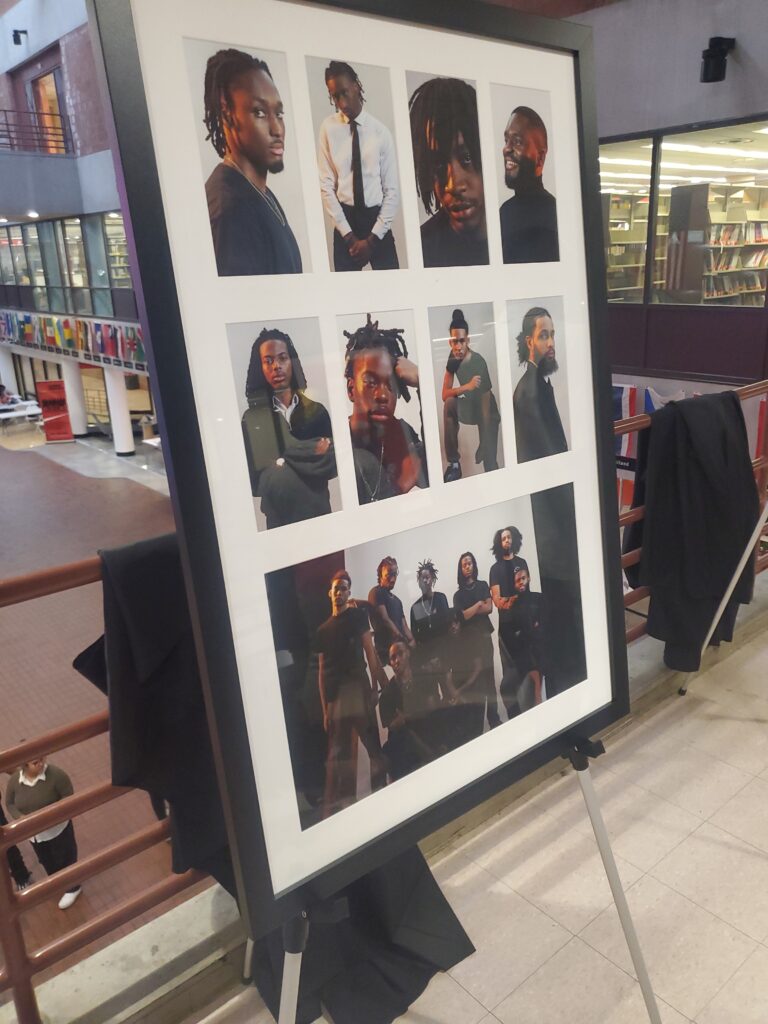
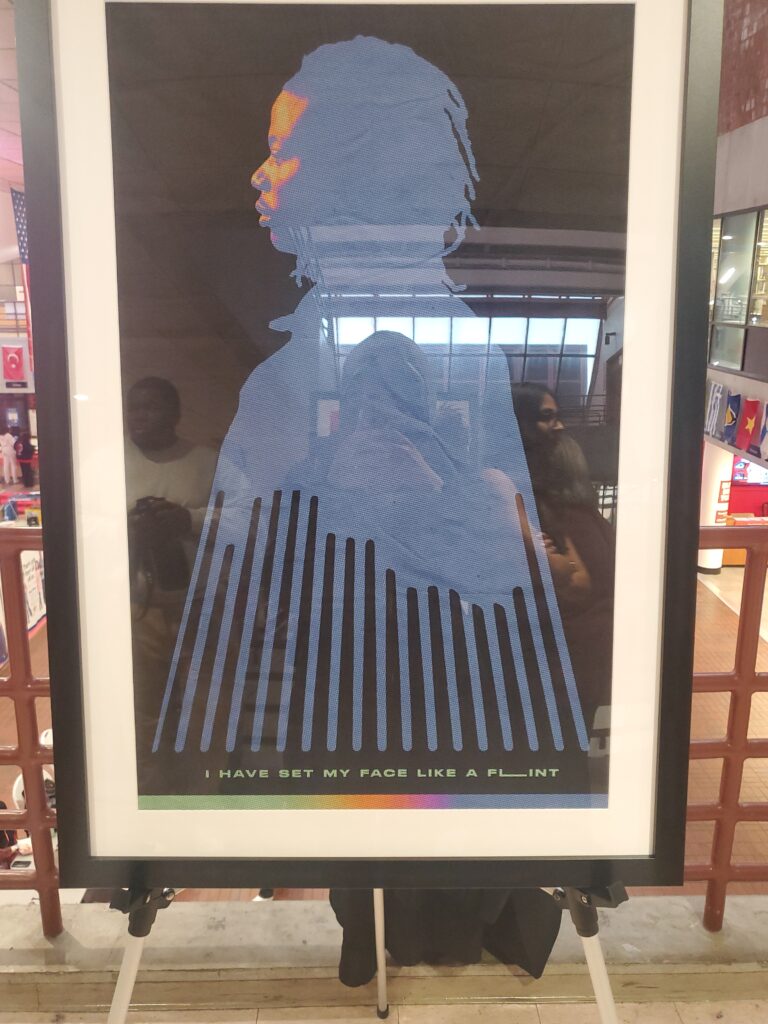
Julian Ali, the artist behind the featured exhibition, presented a short video about his work and discussed his creative process, emphasizing his engagement with the York community and the theme of “taking up space.”
Dr. Lindamichelle Baron concluded the event with a powerful poem.
Julian Ali the artist behind “Taking up space” Reinforcing the importance of individual expression.
What inspired you to do this body of work??
“ So the body of work is called Taking Up Space. And what inspired it was resilience, community and belonging. I got asked by Roosevelt,Assistant Director of First Year Experience & Mentoring Programs, to create a body of work using the students active within BMI as my muses. So, I took it upon myself to get involved because much like these young men, I was also in an academic mentorship group that supported me through my undergraduate years. So a lot of this work is inspired by community and me giving back to my younger self.”
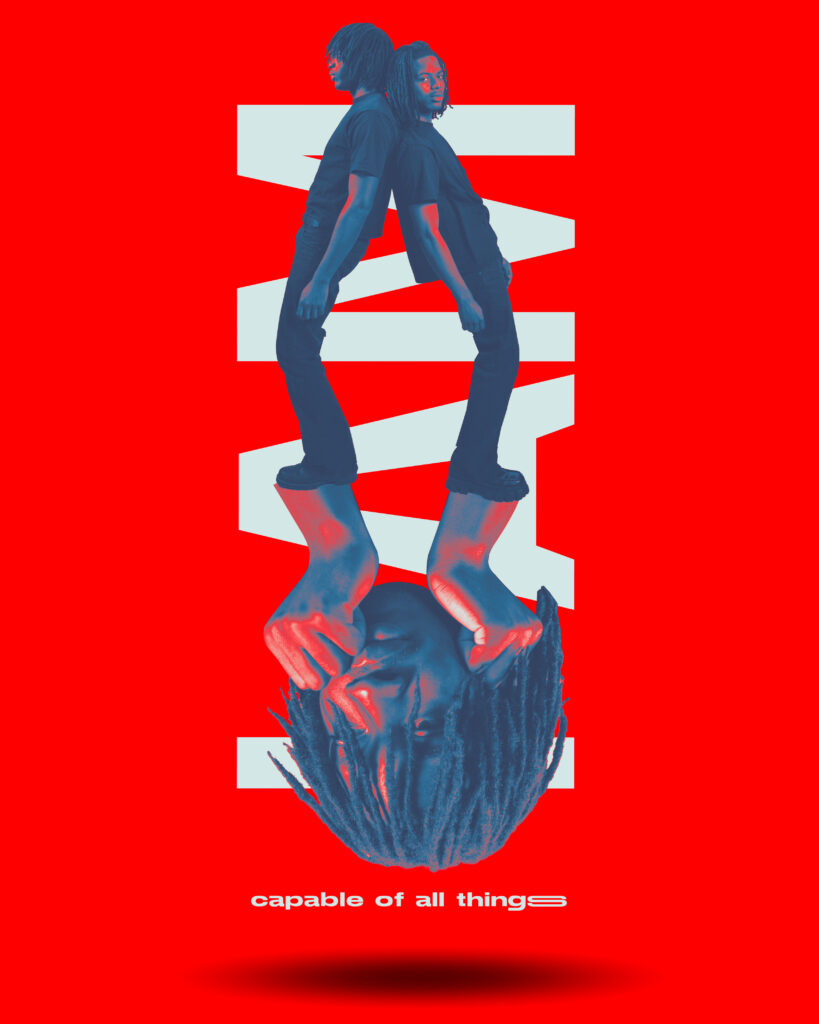
How did the York Male Initiative find your work?
“Roosevelt was actually a fan of body of work I did back in 2018 entitled #BLACKKings and kept me in mind for this particular moment, It was the first body of work, I truly felt I had created that truly spoke to something bigger than myself.f And I knew that when it took on a life of its own after I began to share. ”

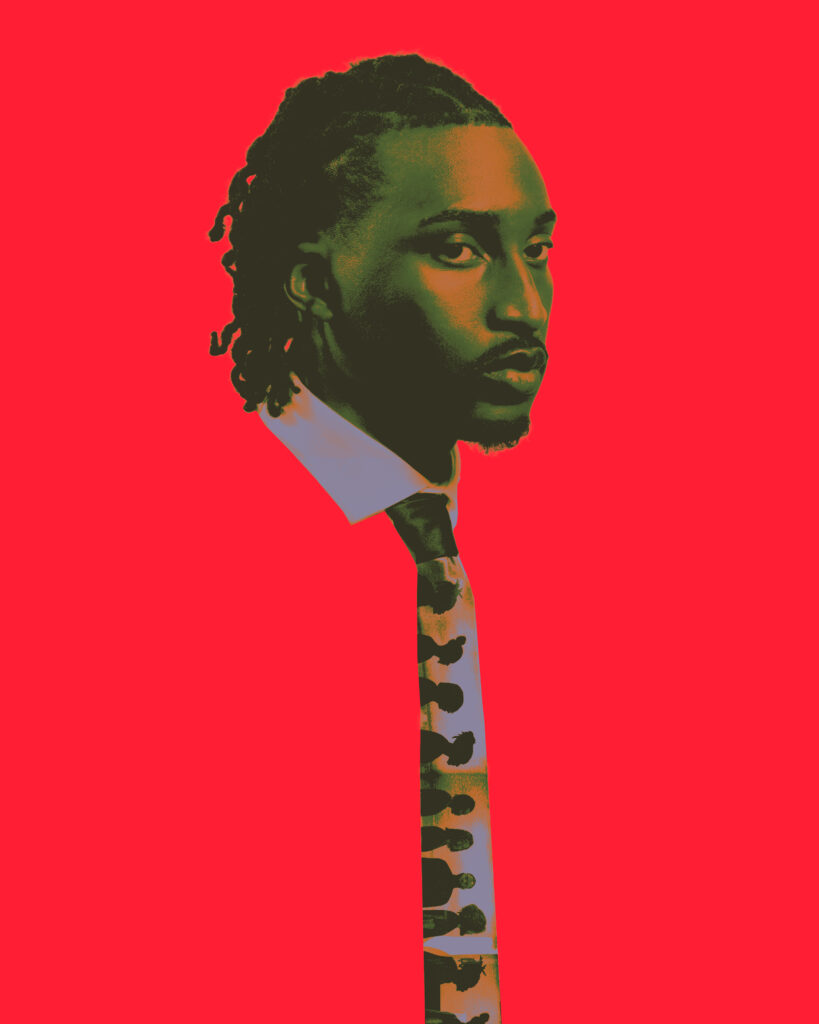
What was the idea? Or what was the concept for this piece suppose to be?
“The concept, again, was community, resilience, belonging. After recently visiting the Whitney, I got really inspired by a painter named Barkley L. Hendricks, who’s a black painter that attended Yale in the 1970’s and was the first African American to have a solo exhibit at the Frick Collection in Manhattan for his portraits of Black men and women.. Within his work he masterfully highlighted Black Subjects with negative space and realism. And I really wanted to do the same, but also fill in that space with intention and purpose.”

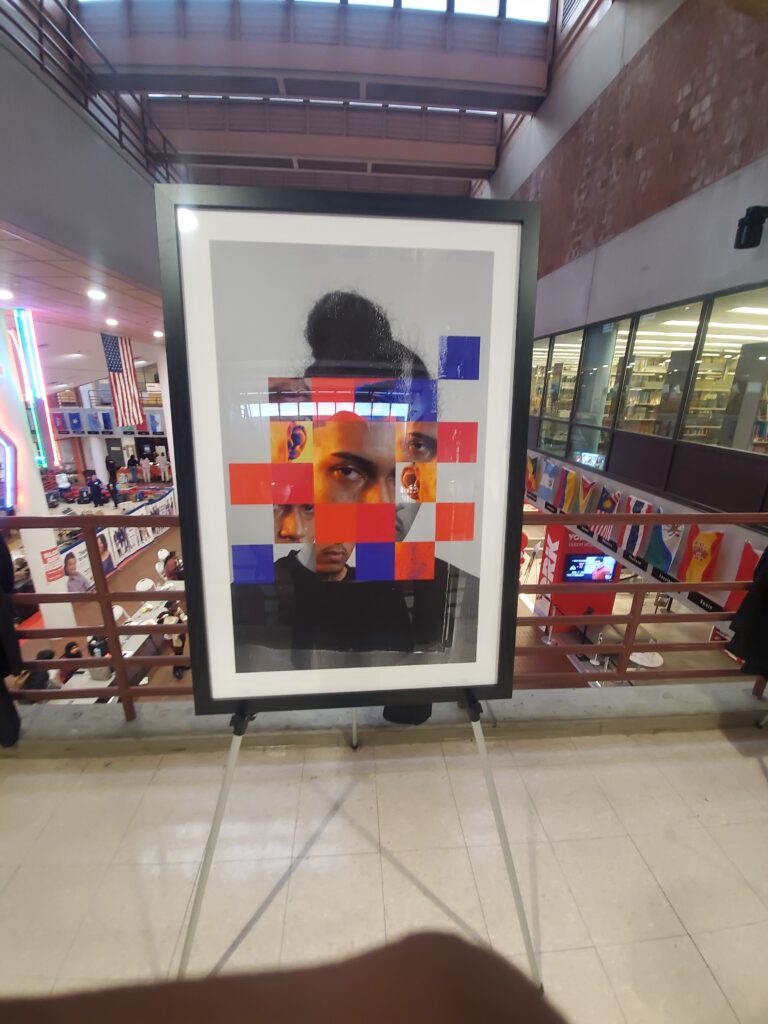
How was it working with students? How was this experience?
The young men that I had the opportunity to work with are amazing, man. They remind me so much of myself at that age; eager and full of dreams. Our collaboration was a reminder to trust in self, the process, and the universe.”


